
WinShark Games Canada 2026
 Available in US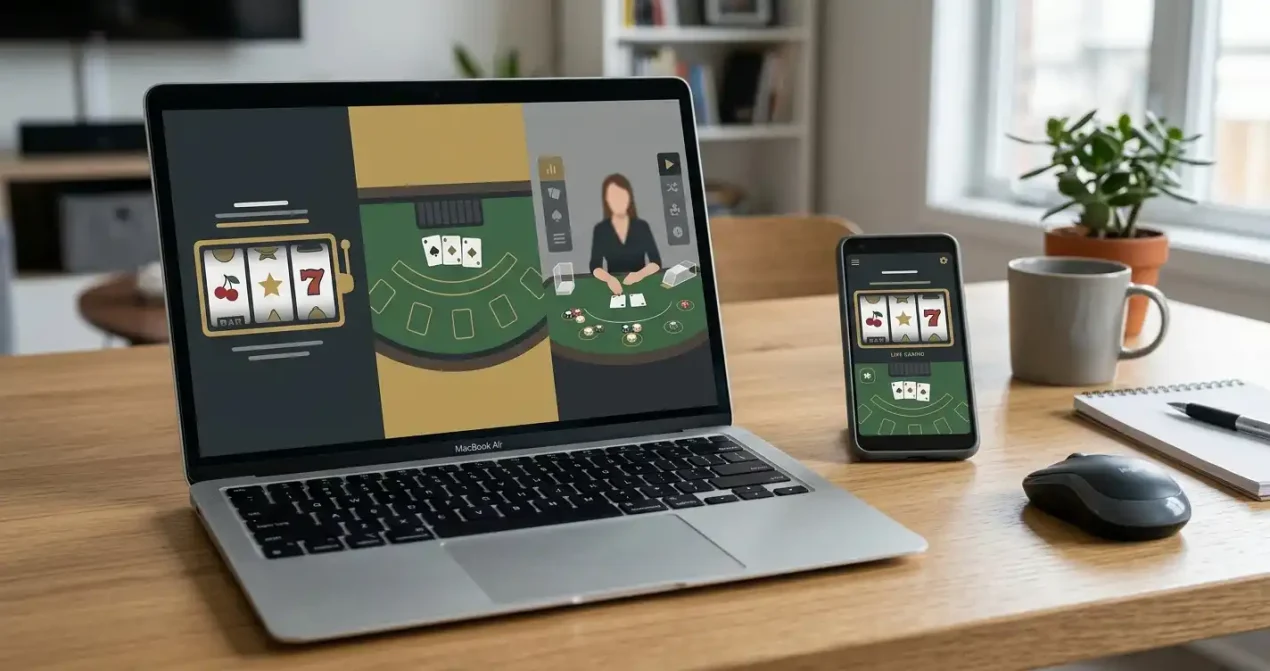
Contents
WinShark’s game catalogue covers three broad formats that matter most when choosing how to play: slots, table games and live casino. The catalogue is supplied across multiple providers, and browser-based mobile play is supported. The most useful way to compare those options is by pace, interaction, screen demands and the kind of information you can inspect before committing money, rather than by chasing a headline game total.
The catalogue is broad enough to compare by format
WinShark combines slots, table games and live casino within a large multi-provider catalogue. That breadth matters because each format asks different things from the player. A slot is mostly about understanding the paytable, stake size and bonus mechanics. A table game is more rule-driven and can reward knowing the structure of the game before the first wager. Live casino adds a streamed dealer, timed rounds and a stronger dependency on connection quality and interface responsiveness.
For a Canadian reader, this means the useful first decision is not “which game is best?” but “which format fits the way I want to play?” Someone using a phone for a short session may care more about control size and screen clarity. Someone who prefers slower, rule-based decisions may find table games easier to evaluate. A reader drawn to live casino should pay particular attention to round pace and whether the stream remains stable on the connection they actually use.
The main WinShark overview places the game catalogue beside payments, support and browser access. That broader context is important because game choice is only one part of the experience. A catalogue can be large and still be a poor fit if the payment route, session controls or mobile setup do not match how you intend to use the site.
Slots favour quick scanning but still need a rules check
Slots are the fastest category to browse because individual titles usually present a compact set of controls: stake, spin, paytable and game information. That simplicity can be misleading if a player treats every title as interchangeable. Two visually similar slots can differ in feature frequency, maximum stake options, bonus-round mechanics and how clearly the game information is presented.
A practical slot check takes less than a minute and is more useful than choosing by artwork alone:
- Open the game information first. Read the paytable, feature rules and stake range before the first spin.
- Set the stake deliberately. Confirm the amount shown is the total stake for one spin, not a per-line or per-credit figure you have mentally converted incorrectly.
- Check autoplay or rapid-play controls. Faster interaction can compress many wagers into a short period, so session cost can rise quickly even when each individual stake looks small.
- Use a session limit in money, not in “number of wins.” A win-based stopping rule can encourage chasing; a fixed loss budget is easier to follow.
The key distinction is between what the game screen shows and what you infer from it. A flashy feature label is not a promise of frequent wins. A recent payout does not change the probability of the next independent spin. Treat every stake as money at risk rather than as progress toward a result.
Table games reward knowing the rule set before the stake
Table games place more weight on rules than on visual presentation. Whether you are looking at blackjack-style games, roulette-style games or other card and wheel formats, the important first step is to understand which decisions belong to the player and which outcomes are random. A familiar game name does not guarantee that every rule variant is identical.
A useful pre-play routine is to separate the game into three layers:
- Rules: what actions are allowed, what ends a round, and how wins are settled.
- Stake structure: minimum and maximum selectable bets within the game interface.
- Session pace: how quickly one round turns into the next and how easy it is to stop after a planned number of decisions.
This approach is especially useful on mobile. Small screens can hide secondary controls behind menus or collapsible panels, so take a moment to locate the rules, balance display and exit controls before wagering. If a table interface feels cramped or the controls are easy to mis-tap, moving to a larger screen is a practical usability decision, not a sign that you need to adapt your betting style.
Live casino adds a stream and a fixed round rhythm
Live casino is different from ordinary table play because the game is tied to a video stream and a dealer-led round. That creates a social, studio-style experience, but it also means the player has less control over pace. Betting windows open and close on a schedule, and the next round can begin quickly.
Before joining a live table, check the practical environment around the game. Stable Wi-Fi or a reliable mobile-data connection reduces the chance of a stalled stream during a betting window. Headphones can make dealer audio easier to follow in a shared space, while a larger screen can make side bets and table history easier to inspect. These are usability considerations rather than reasons to increase a stake.
Live play also benefits from a pre-set stopping point. Because rounds arrive continuously, it is easy to let “one more hand” or “one more spin” replace the original session plan. Decide the money limit and approximate session length before opening the table. If the stream or interface becomes frustrating, leave the table rather than trying to recover a previous result through a larger wager.
Browser play shifts attention to screen and connection quality
WinShark supports play through a mobile browser. For the player, the important questions are whether the game resizes cleanly, whether the controls remain readable, and whether the connection is stable enough for the chosen format.
Slots are usually the least demanding on connection continuity because the interface is mostly local interaction around each spin. Table games also work well in a browser when controls fit clearly on the screen. Live casino places the greatest pressure on connection quality because the video stream and betting window have to remain synchronized.
| Game format | Main interaction | Browser check | Good pre-session habit |
|---|---|---|---|
| Slots | Spin controls and feature rules | Stake and paytable remain readable without accidental taps | Set a fixed loss budget before the first spin |
| Table games | Rule-based decisions and wagers | Action buttons and game information fit clearly on screen | Read the exact rule variant before staking |
| Live casino | Dealer-led timed rounds | Video and betting controls remain stable on the connection | Set both a money limit and a session-time limit |
If you plan to move money before a session, check the WinShark payment methods guide separately. Funding choice and game choice solve different problems: one determines how money moves, while the other determines the pace and structure of play.
Provider breadth is useful when the interface stays clear
A multi-provider catalogue can create variety in visual style, game mechanics and table presentation. The practical benefit is choice, but the trade-off is inconsistency. Different studios can organize game information in different places, use different terminology for similar features, or present stake controls in different layouts. That makes a repeatable checking routine more useful than relying on familiarity with one title.
When opening a game from a provider you have not used before, look for the information icon or rules menu, confirm the stake, and identify how to leave the game before placing a bet. For live titles, check whether the game shows the table limit and betting timer prominently. For slots, find the paytable and feature description. For table games, read the variant-specific rules rather than assuming the title follows the version you already know.
The catalogue should serve your decision process, not reverse it. Filtering by the type of session you want—fast solo play, rule-based table play or streamed live play—is more disciplined than scrolling until a thumbnail feels appealing.
A simple decision framework keeps game choice practical
Use the format itself as the first filter, then test the interface before money is at risk. The following sequence keeps the decision focused on controllable factors:
- Choose the pace. Slots are fast, table games are decision-led, and live casino follows a dealer-driven rhythm.
- Check the information. Open rules, paytable or table details before betting.
- Check the device fit. Make sure the controls are readable and the game remains usable on your actual screen.
- Set the budget. Decide the maximum loss before the session starts.
- Set an exit condition. A time limit or fixed loss limit is easier to follow than waiting for a particular win.
This framework does not depend on a particular provider or headline catalogue size. It works because it centres the decision on pace, information quality, usability and budget—factors you can assess directly before and during play.
Common questions about WinShark games
What kinds of games does WinShark offer?
WinShark offers slots, table games and live casino games across a multi-provider catalogue.
Can I play WinShark games in a mobile browser?
Yes. WinShark supports browser-based mobile play, so the practical focus is screen layout, connection stability and game controls in the browser.
How should I compare slots, table games and live casino?
Start with the pace and information you want. Slots are fast and self-contained, table games are rule-driven, and live casino adds a streamed dealer and scheduled round flow.
The strongest choice starts with pace, rules and screen fit
WinShark gives players access to slots, table games and live casino across a multi-provider catalogue, with browser play supported on mobile devices. That is enough variety to make category choice meaningful without relying on a headline game count. The most useful approach is to choose the pace you want, read the game information before staking, make sure the controls fit your device, and set a money limit before the session begins. A broad catalogue creates options; disciplined selection determines whether those options are manageable.
This material was created by the WinShark Canada Guide team.
Related posts

WinShark Safer Gambling Canada 2026

WinShark Payment Methods Canada 2026