WinShark Payment Methods Canada 2026
 Available in US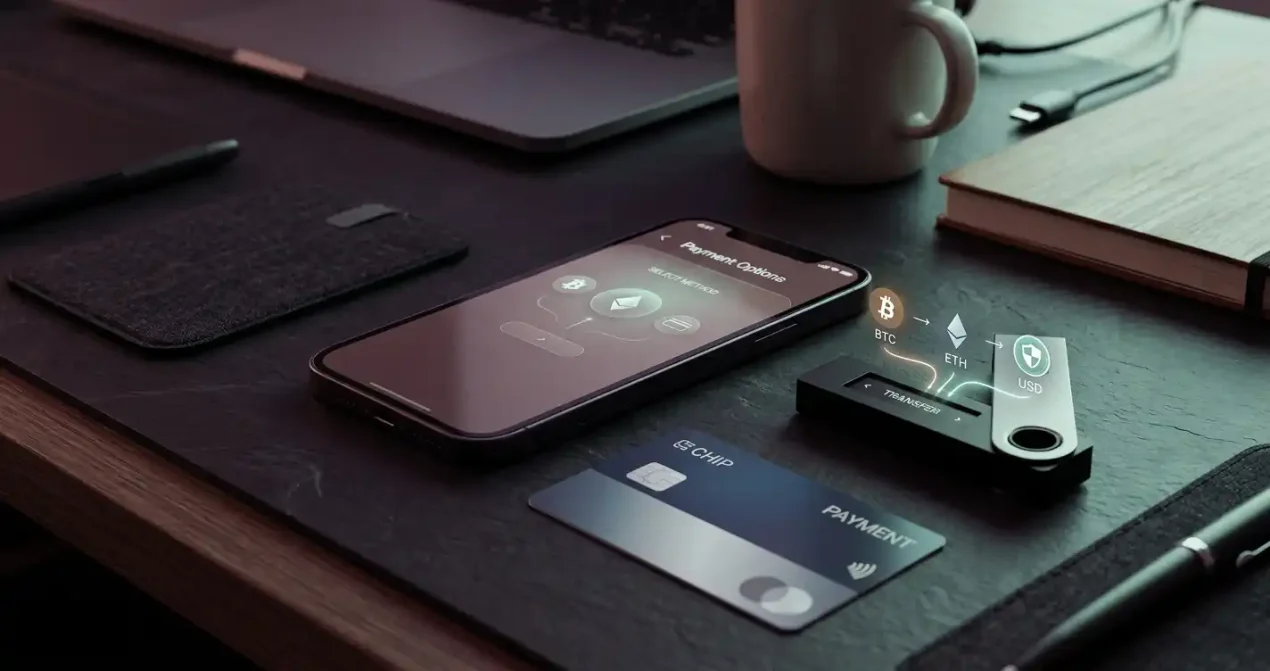
Contents
WinShark supports a hybrid payment setup for Canadian users: CAD, Interac, bank cards, e-wallets and cryptocurrency are all part of WinShark’s payment mix, with BTC, ETH and USDT among the listed crypto examples. The useful comparison is not simply how many methods appear in a cashier. It is how the route changes currency conversion, reversibility, network risk and the records you should keep for a withdrawal.
CAD and Interac keep the money reference straightforward
CAD support is the simplest starting point for a Canadian reader because it reduces the mental conversion step. If your household budget and bank account are already in Canadian dollars, a CAD-denominated route lets you compare the deposit or withdrawal amount directly with the money you actually use. Interac is also listed for Canadian players, putting a familiar domestic-style payment rail beside cards, e-wallets and crypto.
The practical advantage of a fiat-first route is clarity rather than speed. You can see the transaction in the same currency as your budget and avoid adding crypto price movement to the calculation. That does not mean every card, wallet or Interac transaction behaves identically. Payment providers can apply their own limits, verification steps or processing rules, so the current cashier screen remains the place to confirm the method-specific details before you authorize a transaction.
If you want a clean record, keep the confirmation page or banking reference for each deposit and withdrawal. A payment reference is more useful in a later support conversation than a memory of the amount alone. The main WinShark overview also puts this payment flexibility beside the rest of the product so you can decide whether the payment setup actually matches how you plan to use the site.
Cards and e-wallets sit between bank rails and crypto
WinShark supports bank cards and e-wallets. These are useful middle-ground options for readers who do not want to move crypto but also do not want every transaction to originate from the same bank rail. The exact experience depends on the provider: a card payment can involve issuer checks, while an e-wallet can create a separate account layer between the casino and the funding source.
For any non-crypto route, check three things before confirming: the currency shown, the name of the payment method, and whether the withdrawal path is compatible with how you deposited. Withdrawal limits, processing details and fees should be checked for the selected method at the point of transaction rather than treated as one universal figure.
That separation is important because a low-friction deposit can create a false sense that the withdrawal will be identical. Payment systems often treat incoming and outgoing transfers differently. Keep your payment reference, and avoid splitting one transaction across multiple routes unless you understand how the return path works for each method.
BTC, ETH and USDT add network and price exposure
BTC, ETH and USDT are listed cryptocurrency examples for WinShark. Crypto can be useful when a reader already manages digital assets, but it adds two risks that do not exist in the same form with CAD. First, the asset value can move between the time you fund the account and the time you withdraw. Second, blockchain transfers can be irreversible once completed.
The network itself matters as much as the coin ticker. A token such as USDT can exist on more than one blockchain, and sending to an address on the wrong network can result in a transfer that cannot be recovered through an ordinary chargeback process. For BTC, ETH and USDT, use the network shown in the current cashier rather than assuming a chain from the ticker alone.
Use a small verification routine: compare the asset ticker, compare the network name, compare the first and last characters of the address, and confirm the amount after any network cost. If the route requires a memo, tag or additional identifier, treat that field as part of the address. Do not rely on an old saved address if the cashier presents a fresh one.
The crypto table separates supported coins from route-specific terms
WinShark lists BTC, ETH and USDT. Network, minimum, processing and fee details can vary by transaction route, so the table keeps those fields non-numeric instead of implying one universal value.
| Coin | Network | Min Dep | Min WD | Speed | Fee |
|---|---|---|---|---|---|
| BTC | Confirm in cashier | — | Method-dependent | Method-dependent | — |
| ETH | Confirm in cashier | — | Method-dependent | Method-dependent | — |
| USDT | Confirm in cashier | — | Method-dependent | Method-dependent | — |
A dash is not a zero and does not mean “free” or “unlimited.” Check the value displayed for the exact route you are about to use. Crypto network costs can also change independently of a casino, so the amount that leaves a wallet may not equal the amount that arrives after network fees.
Fiat and crypto create different failure modes
A comparison is most useful when it focuses on what can go wrong. With CAD routes such as Interac, cards or e-wallets, the main practical checks are the currency, account ownership, method compatibility and payment reference. With crypto, add asset selection, network selection, address accuracy, price movement and transaction irreversibility.
| Decision point | CAD / traditional route | Crypto route |
|---|---|---|
| Value reference | Directly in CAD when the route is CAD-denominated | CAD-equivalent can change as the crypto price moves |
| Transfer correction | Some payment providers may offer dispute or reversal processes depending on the transaction | Completed blockchain transfers are generally irreversible |
| Address or account check | Confirm payment account and recipient details | Confirm asset, network, address and any memo/tag |
| Record to keep | Bank, card, Interac or wallet reference | Transaction hash plus the cashier record |
| Extra price risk | No crypto price movement when both sides remain in CAD | Asset value can move before or after the casino transaction |
If simplicity is the priority, a CAD-denominated route keeps the accounting easier to read. If you already use crypto, the extra discipline is to treat network and value exposure as part of the transaction rather than as background detail. Neither route removes gambling risk; it only changes the operational risks around moving money.
Choose the withdrawal route before you deposit
A useful payment decision starts with the exit path. Before depositing, look at the withdrawal methods offered to your account and ask whether you would be comfortable receiving funds through the same general route. This is especially important when using crypto because the return transaction may require an address and network that you control correctly.
- Set the budget in CAD. Even if you use crypto, start with a loss limit in the currency you use for everyday finances.
- Pick the route. Choose Interac, card, e-wallet or crypto based on how you want the money trail to work.
- Read the current transaction fields. Confirm the currency, network where relevant, limits shown and any cost before submitting.
- Save the reference. Keep the banking reference, e-wallet receipt or blockchain transaction hash.
- Do not chase a failed transaction with repeated deposits. If a transfer does not appear, stop and resolve that transaction before sending another.
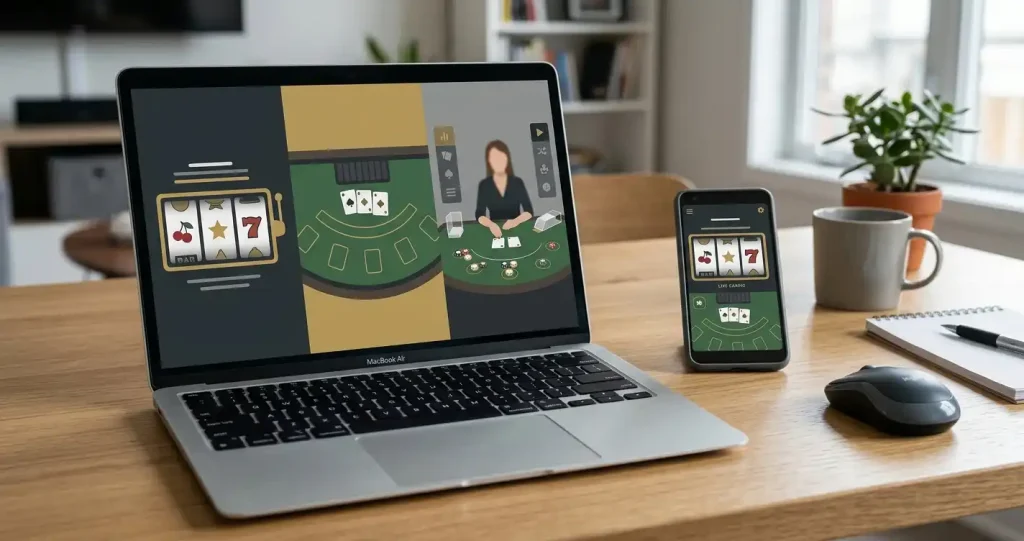
The last step matters for budgeting. A delayed or unclear payment should not become a reason to send more money. If you need support, use the transaction reference and describe one transfer at a time. For the product side of the decision, the games guide separates slots, table games, live casino and mobile-browser practicalities so the funding decision does not get mixed with game choice.
Common questions about WinShark payments
Does WinShark support CAD?
Yes. CAD is supported, giving Canadian readers a direct fiat reference currency for deposits and withdrawals where the selected payment route supports it.
Is Interac listed for Canadian WinShark users?
Yes. Interac is one of the Canadian-facing payment routes associated with WinShark, alongside cards, e-wallets and cryptocurrencies.
Which cryptocurrencies are listed for WinShark?
BTC, ETH and USDT are listed crypto examples. Check the exact network at the point of payment because sending on the wrong network can be irreversible.
Are WinShark withdrawal limits and fees fixed here?
Withdrawal limits, processing details and fees can depend on the selected method. Check the current cashier terms for that route before authorizing a transaction.
The best payment route is the one you can audit clearly
WinShark’s Canadian-facing payment profile supports both familiar fiat habits and crypto use: CAD, Interac, bank cards, e-wallets, BTC, ETH and USDT are all part of the payment mix. The decision becomes clearer when you focus on operational risk rather than method count. CAD routes keep the budget reference simple; crypto adds price movement, network choice and irreversible transfers. Whichever route you use, confirm the live transaction details before submitting, keep the reference afterward, and never turn an unresolved payment into a reason to increase the amount you send.
This material was created by the WinShark Canada Guide team.
Related posts

WinShark Safer Gambling Canada 2026
WinShark License Canada 2026