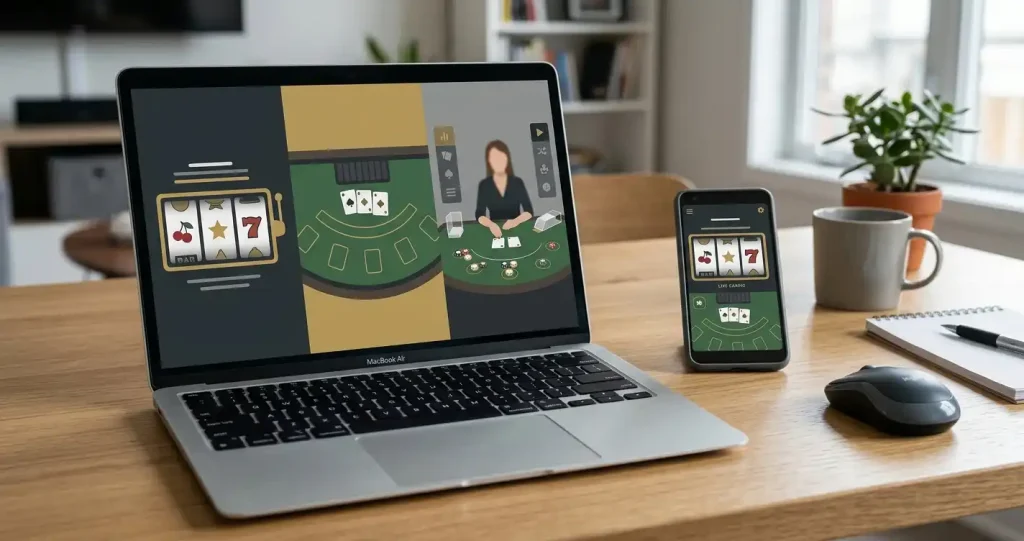
WinShark Safer Gambling Canada 2026
 Available in US
Contents
Safer gambling starts before a deposit is made. WinShark combines CAD payment routes, Interac, cards, e-wallets and cryptocurrency with slots, table games and live casino titles, so there are several ways for spending and session pace to change. The simplest protection is to decide the budget, time limit and stopping point in advance, then keep those limits separate from any result on the screen.
Use Canadian dollars as the budget reference
For a Canadian reader, CAD is the clearest unit for deciding what can be lost without affecting rent, food, debt payments or savings. Set the maximum gambling amount in Canadian dollars even when the deposit will be made with BTC, ETH or USDT. That keeps the decision tied to household money rather than to a changing token balance.
Once the budget is set, treat it as a ceiling rather than a target. A session can end before the full amount is used. Do not raise the ceiling after a loss, after a near win or because another deposit method remains available. Payment variety is a convenience feature, not extra budget.
If crypto is used, check the approximate CAD value before and after network costs. The asset can change in value independently of gambling results, and blockchain transfers may be irreversible. Those two risks belong in the decision before any casino balance is funded.
Set a time limit as well as a money limit
Slots, table games and live casino products move at different speeds, but all can make time easy to overlook when the next round is immediately available. Choose a session length before opening a game and use an external clock or alarm that does not depend on the casino interface. When the time ends, close the session even if the balance is above or below the starting point.
A break is useful because it separates one decision from the momentum of the previous round. Stand up, move away from the screen and review the budget away from the game. That interruption is more effective than deciding inside the game that the next round will be the last one.
Live casino play can feel slower because a dealer controls the round, while slots can be much faster. Neither pace is automatically safer. The relevant question is whether the chosen limit still works for the number of decisions made during the session.
Do not chase a loss with another payment route
WinShark offers several payment options, which can make it easy to switch rails when one balance is low. A budget should apply across every rail together. If the CAD allowance has been reached through Interac, moving to a card, e-wallet or cryptocurrency does not create new affordable money.
Chasing losses often changes the purpose of the next bet from entertainment to recovery. That shift can lead to larger stakes, longer sessions and decisions made under pressure. A fixed stopping rule avoids negotiating with the result of the previous round.
Withdrawals also deserve separation from continued play. If money has been set aside for withdrawal, do not treat a processing wait as a reason to return the amount to play. Keep the transaction record and let the withdrawal process remain an account task rather than turning it into another gambling decision.
Choose game formats by pace and understanding
A game is easier to budget when its rules and stake are clear. Before playing a slot, check the stake per spin and any feature that changes the total cost. Before a table game, understand the rule set and how side bets alter the wager. Before a live game, make sure the stream and interface are stable enough that decisions are not rushed.
Game variety should not be treated as a reason to sample everything in one session. A familiar format can be easier to monitor than moving repeatedly between games with different rules, stake increments and round speeds. The games guide separates slots, tables and live casino play so those differences are visible.
Do not use a game as a way to repair the result of another game. Switching from slots to a table or from a table to live casino does not reset the money already lost. The budget remains the same across categories.
Keep payment convenience from becoming spending pressure
Interac and CAD support can make payments familiar for Canadians, while crypto can make transfers feel detached from a bank balance. Both routes still represent money. Before depositing, write the amount in CAD and compare it with the limit already chosen for the week or month.
For cards and e-wallets, avoid relying on available credit or a large account balance as a signal that a deposit is affordable. For crypto, avoid treating token appreciation as gambling money. The test is whether losing the amount would affect ordinary financial commitments.
Keeping only one active payment plan for a session can reduce impulsive switching. That does not require using one particular method; it means deciding the route and amount before play, then refusing to add another route simply because the first budget was used.
Know when to stop and seek support
Warning signs include hiding gambling from other people, borrowing to continue, repeatedly breaking a self-set limit, gambling for longer than intended, or trying to win back money needed for everyday expenses. Any of those signs is a reason to stop gambling rather than adjust the strategy.
This guide uses a 19+ age gate for Canada. Gambling Therapy at gamblingtherapy.org provides support resources for people affected by gambling. Reaching out early can be useful even when the situation does not feel severe. Support can also be relevant to family members or friends who are affected by another person’s gambling.
If the immediate problem is an account or transaction issue, keep it separate from the urge to continue gambling. Use the account guide for records and support contact habits, and the payments guide for the practical differences between CAD and crypto routes.
A pre-session plan is easier to follow than an in-session promise
| Decision | Set before play | Do not change because of |
|---|---|---|
| Money | Maximum loss in CAD | A losing streak or near win |
| Time | Session end time | A bonus round or live-table sequence |
| Payment | Chosen rail and amount | Another method still being available |
| Game | Format and stake understood | The desire to recover a previous result |
The plan is intentionally simple. It gives each decision a point of reference that exists before wins and losses start influencing judgement. If a limit needs to change for a future session, make that decision later, away from active gambling.
Common questions about safer gambling
Should a crypto gambling budget still be set in CAD?
Yes. Using CAD as the reference keeps the limit tied to everyday finances even when the transfer itself uses BTC, ETH or USDT.
Does switching games reset a loss limit?
No. The budget applies across slots, table games and live casino play together.
Where can Canadian readers find gambling support?
Gambling Therapy at gamblingtherapy.org provides support resources. This guide uses a 19+ age gate for Canada.
Limits work best when they stay outside the game
WinShark’s range of payment methods and game categories makes choice easy, but safer play depends on narrowing those choices before money is at risk. Use CAD for the budget, set a session end time, choose the payment route in advance and stop when either the money or time limit is reached. If control starts to slip, the right next step is a break or support, not another deposit or another game.
This material was created by the WinShark Canada Guide team.
Related posts

WinShark Payment Methods Canada 2026
WinShark License Canada 2026